
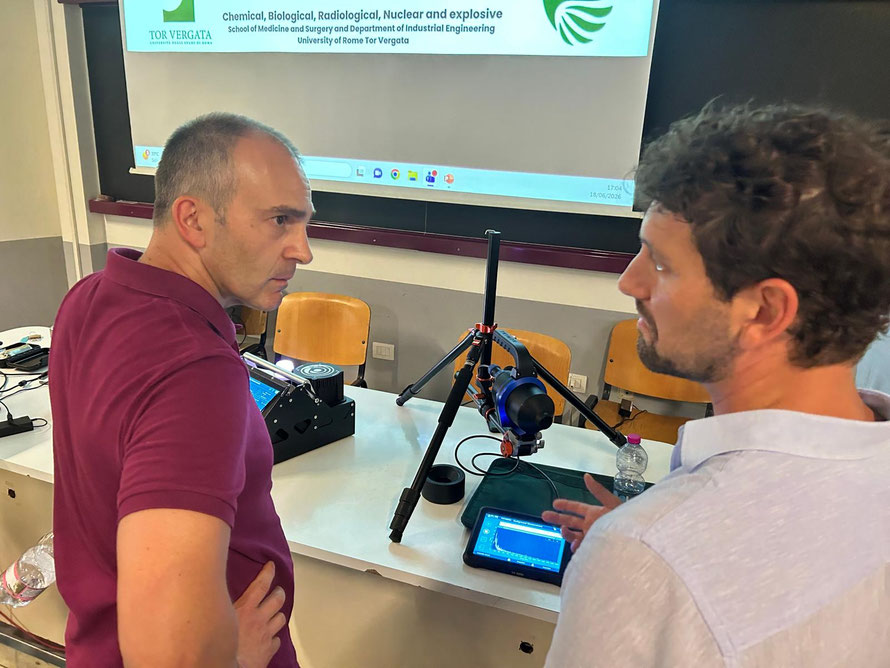
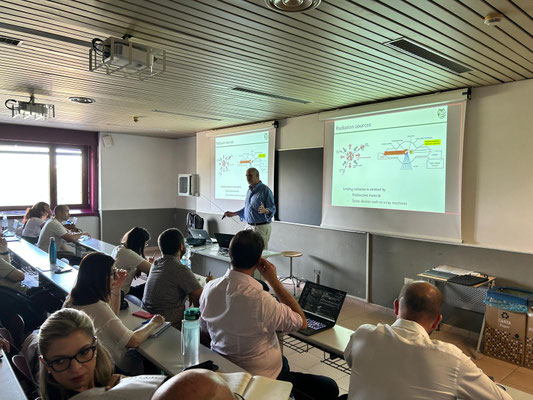
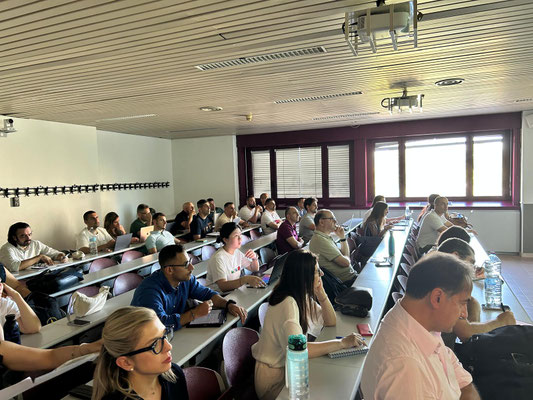
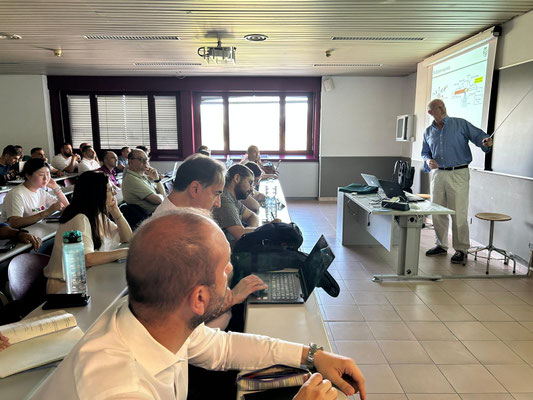
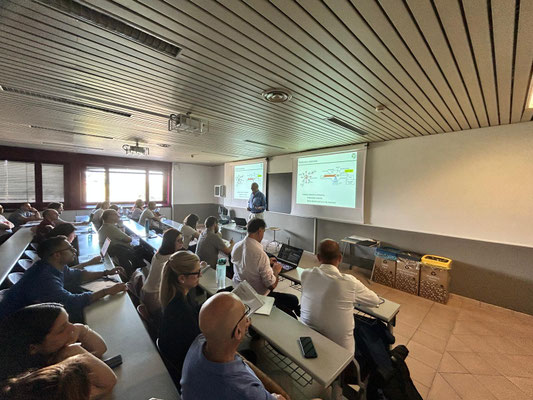
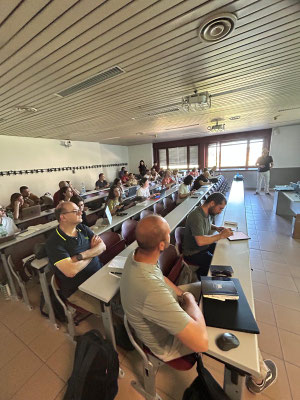
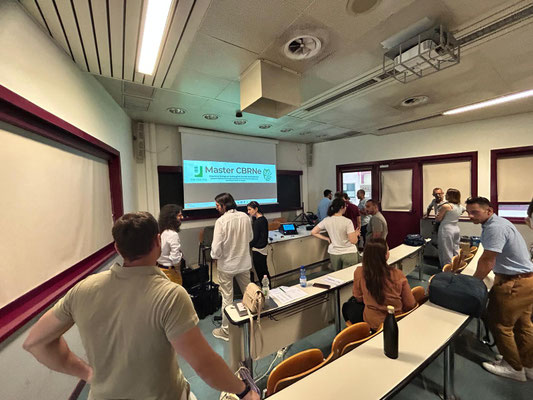
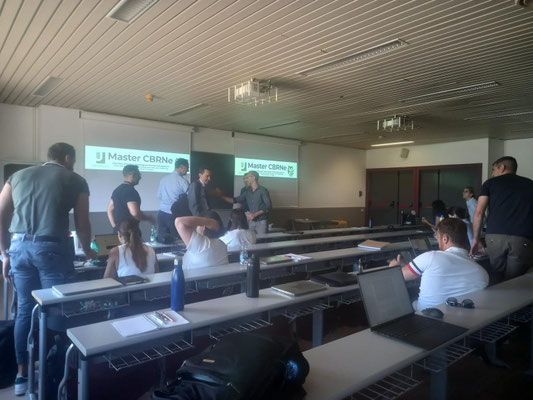
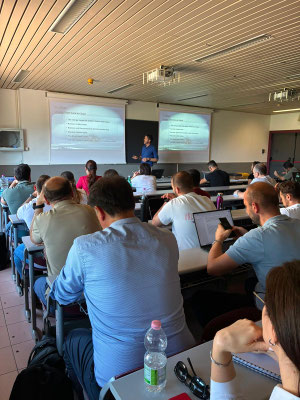
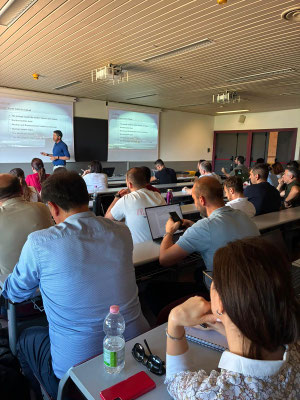
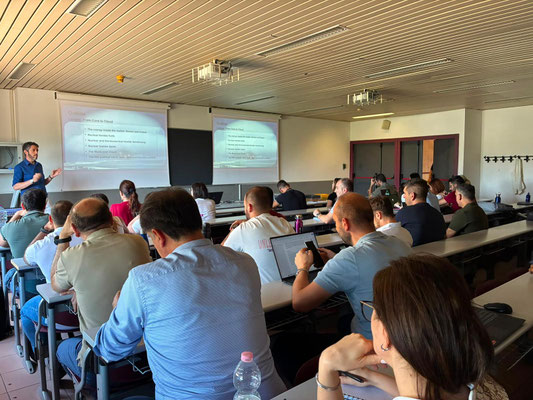
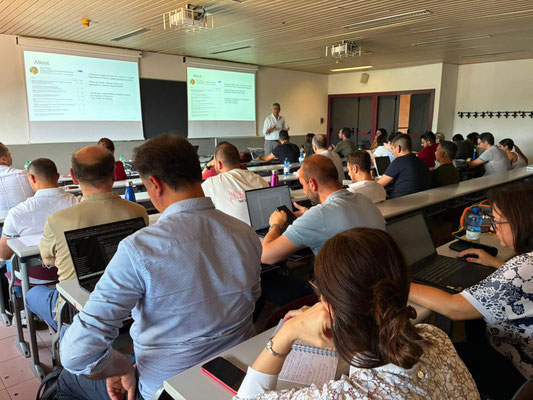
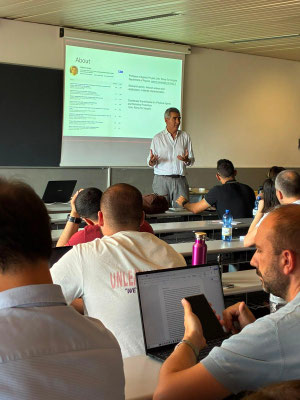
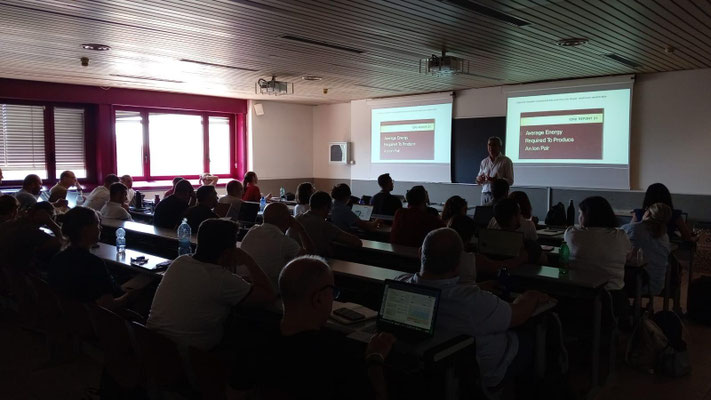
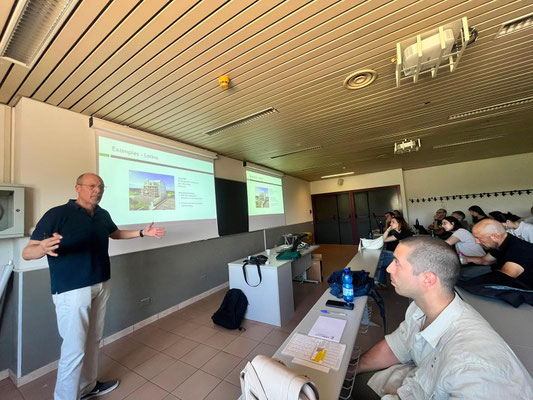
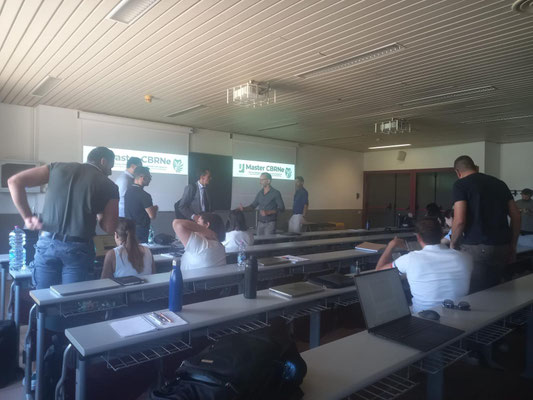
From 15 to 19 June 2026, the International Master Courses in Protection Against CBRNe Events at the University of Rome Tor Vergata successfully delivered the Radiological and Nuclear (RN) Module, offering students an intensive week of lectures and practical activities led by internationally recognized experts from academia, government agencies, research institutions, industry, and defence organizations.
Designed for both first- and second-level Master students, the module provided a comprehensive overview of radiological and nuclear risk management by combining scientific foundations, operational experience, technological innovation, and extensive hands-on training. The multidisciplinary structure of the programme reflects the educational philosophy of the International Master Courses, preparing future professionals to manage complex CBRNe scenarios through an integrated approach.
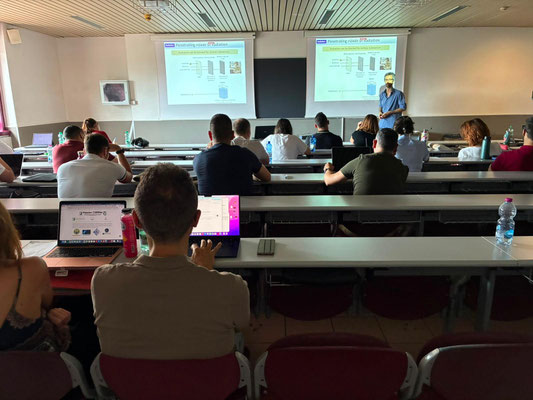
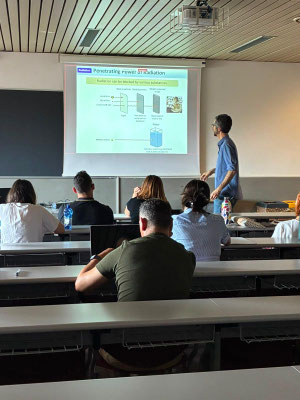
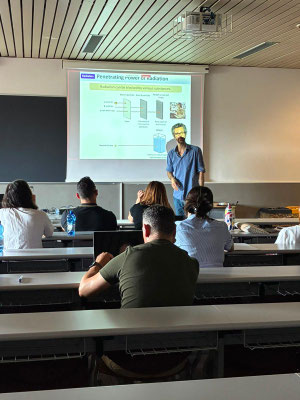
The module opened with Prof. Francesco d’Errico (University of Pisa), who introduced the scientific principles underlying radiological and nuclear emergencies. His lectures covered atomic and nuclear physics, radiation safety, radiological and nuclear threats, and the fundamentals of radiation protection, providing participants with the essential knowledge required to understand the technical and operational topics addressed throughout the week.
The military perspective on radiation protection was presented by Col. Raffaele Zagarella from CISAM – Italian Ministry of Defence, Italian Navy, who shared the experience of one of Italy’s leading military centres in the field of radioprotection, illustrating operational procedures, safety principles, and defence applications in RN environments.
Advanced intelligence and geospatial analysis were explored by Dr. Michael Ian Thornton (INAC CBRNe), whose lectures demonstrated how satellite imagery and remote sensing technologies can support the assessment of attacks on nuclear facilities and enhance decision-making during complex emergencies.
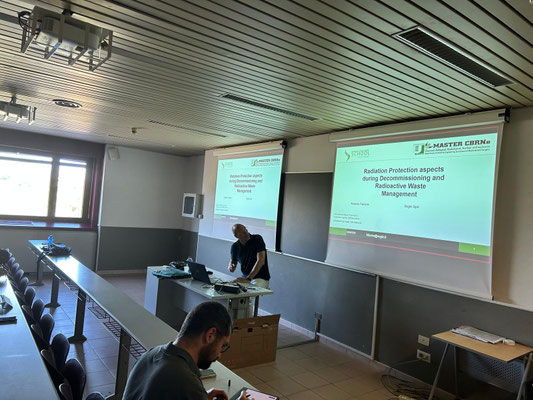
A significant portion of the programme focused on nuclear decommissioning and radioactive waste management.
Dr. Roberto Falcone (SOGIN) presented the methodologies adopted for radiological characterization of nuclear power plants and discussed radiation protection challenges during decommissioning activities. These technical aspects were complemented by Dr. Giovanni Calabresi (SOGIN), who illustrated the international nuclear security framework together with the Italian legislative and regulatory system governing nuclear safety and security.
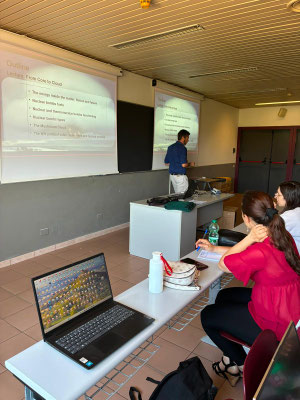
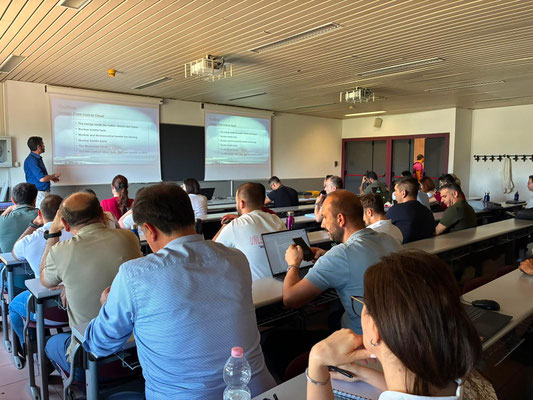
Strategic and geopolitical aspects of nuclear threats were addressed by Dr. Alessandro Rizzo (ENEA), whose lectures, From Core to Cloud, analysed both the scientific principles of nuclear weapons and the strategic consequences associated with their potential use in today’s rapidly evolving international security environment.
The international operational dimension was strengthened through the participation of Col. Carlos Ardanaz, Commander of the Spanish CBRN School, who presented the Spanish national CBRN emergency management system, highlighting organizational structures, response capabilities, and international interoperability within NATO and European frameworks.
Medical and health-related aspects of ionizing radiation were covered by Prof. Roberto Senesi (Department of Physics, University of Rome Tor Vergata), whose lectures focused on the principles of radioprotection, medical implications of radiation exposure, and radiation-related health risks, emphasizing the importance of integrating scientific knowledge with emergency preparedness.
One of the highlights of the week was the extensive practical training organised in collaboration with industry partners. Prof. Massimo Morichi (CAEN) introduced students to state-of-the-art radiological and nuclear detection technologies through hands-on laboratory sessions dedicated to the operation and capabilities of modern radiation detection instruments.
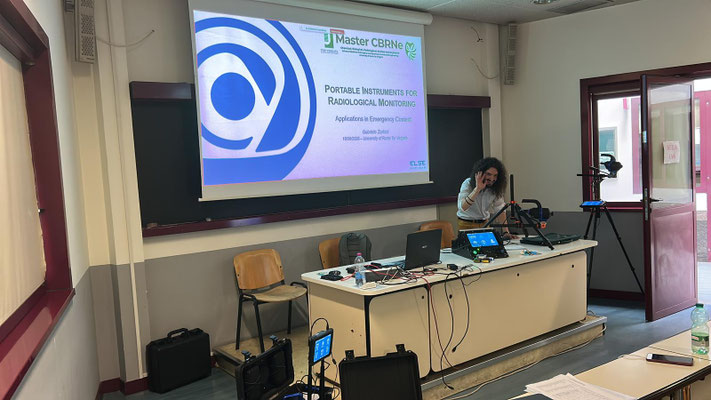
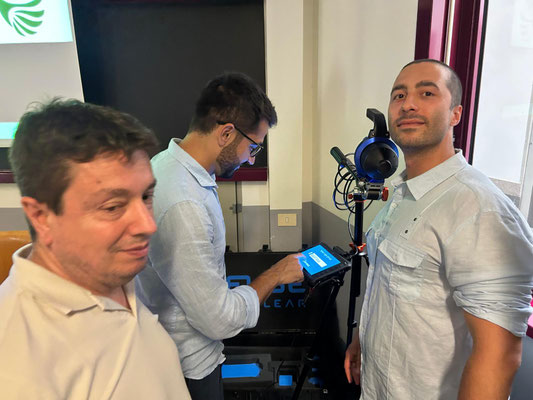
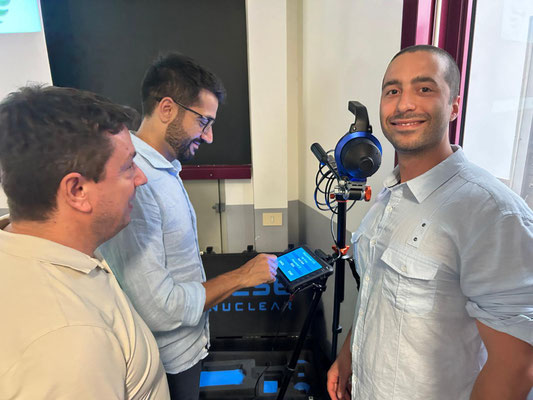
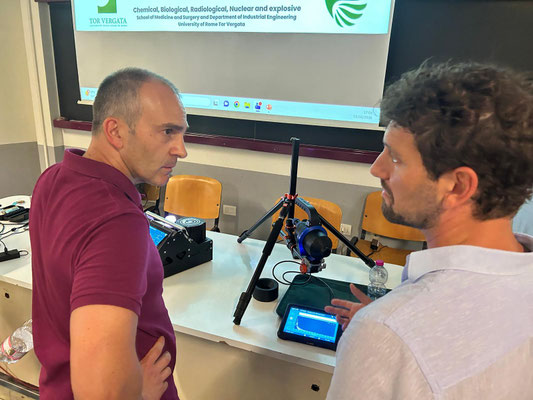
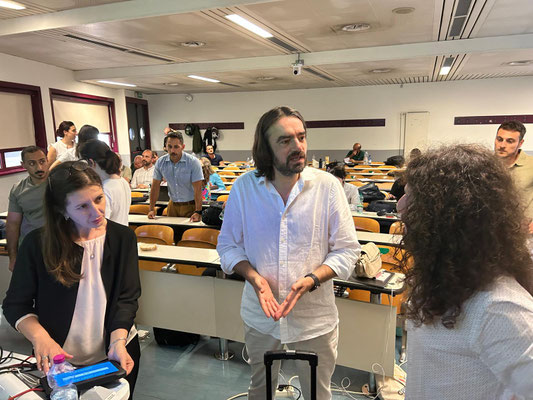
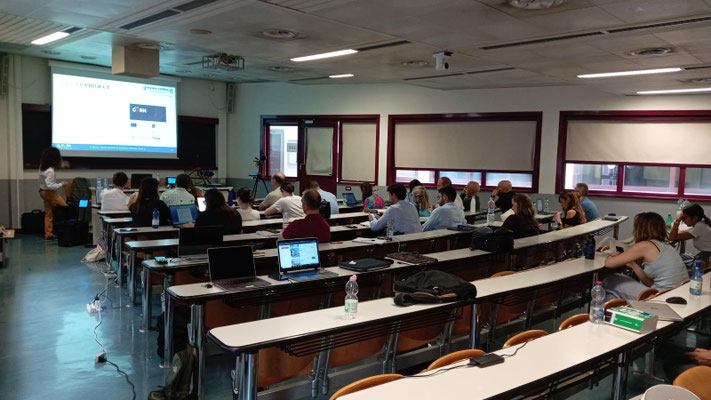
These practical activities were further expanded by Dr. Gabriele Zorloni (ELSE Nuclear), who brought a wide range of professional radiological detection instruments directly into the classroom. Students had the opportunity to work with operational equipment used by emergency responders, testing different detection systems under realistic scenarios while learning instrument configuration, operational procedures, measurement techniques, and field applications. This hands-on experience allowed participants to bridge the gap between theoretical knowledge and operational practice, providing invaluable familiarity with technologies currently employed during radiological monitoring and emergency response.
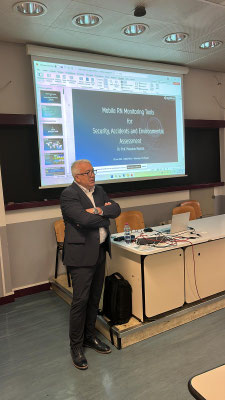
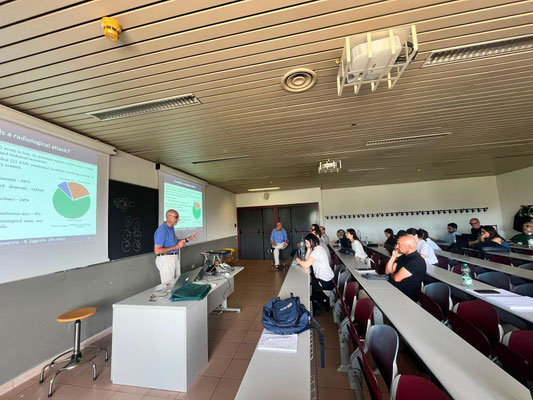
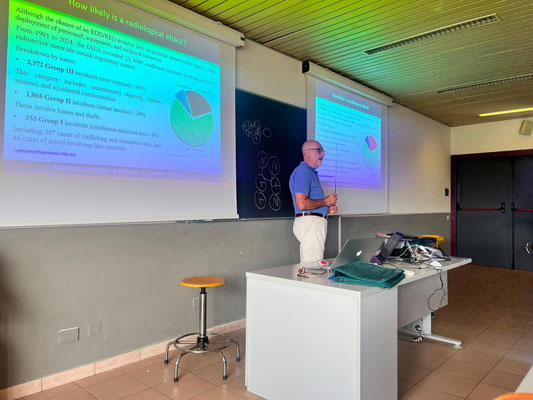
The module concluded with Prof. Andrea Malizia, Director of the International Master Courses in Protection Against CBRNe Events, who examined emerging radiological and nuclear threats, including radiological dispersal devices (RDDs), evolving nuclear risks, and the growing interaction between traditional RN emergencies, hybrid warfare, and technological innovation.
The final scientific contribution was delivered by Dr. Stefano Chiappini (National Institute of Geophysics and Volcanology – INGV), who presented advanced techniques for gamma-ray spectroscopy using HPGe detectors, airborne NaI systems, and environmental radioactivity monitoring, illustrating how cutting-edge instrumentation supports both environmental surveillance and emergency response operations.
The RN Module once again demonstrated the unique value of the International Master Courses in Protection Against CBRNe Events, bringing together leading experts from universities, defence organizations, government agencies, research institutions, and industry. By integrating scientific excellence, operational expertise, advanced technologies, and extensive practical training with professional instrumentation, the programme continues to provide participants with the multidisciplinary competencies required to address the increasingly complex radiological and nuclear challenges of the modern security environment.
Write a comment